Best Ways to Organize Kitchen Drawers
A drawer that jams, hides your favorite spatula or collects mystery gadgets is frustrating. You don't necessarily need a new kitchen: a few thoughtful changes can make everyday tools easier to find and put away.
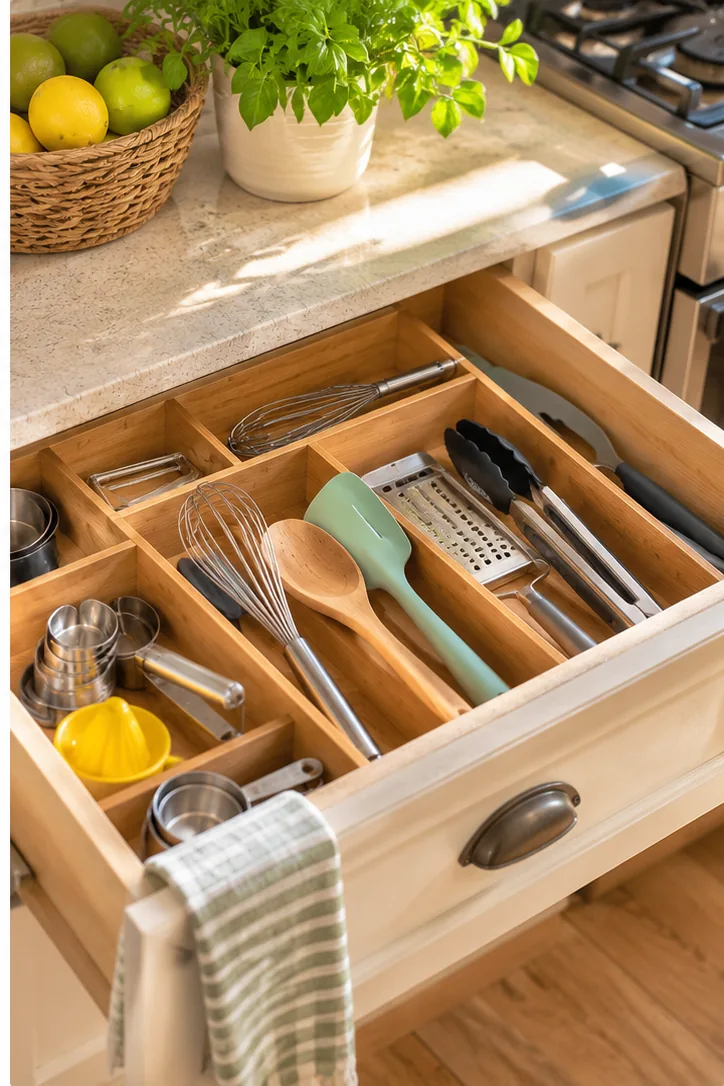
How this guide was prepared: These are practical organization ideas and shopping considerations, not hands-on product tests. We have not personally tested or ranked specific organizers. Measure your drawers and check current product specifications before purchasing.
Start with a 15-minute drawer reset
- Empty one drawer at a time. Place everything on a towel or clean counter so you can see what you own.
- Sort by purpose. Group cutlery, cooking tools, measuring equipment and occasional-use items.
- Remove duplicates. Keep the utensils you reach for; relocate or donate serviceable extras.
- Wipe and dry. Clean the base and runners before returning items.
- Put everyday items closest. Store the most-used tools near the prep or cooking area, if practical.
1. Use compact cutlery trays for everyday utensils
Flat trays make forks, spoons and table knives easy to separate. For narrow drawers, angled or stacked cutlery organizers can free up width. Check the drawer's interior width, depth and usable height; angled organizers often need more vertical clearance than they appear to.
Best for: Everyday cutlery. Watch out for: Tall handles, oversized utensils and slots that are difficult to clean.
2. Choose adjustable dividers for awkward drawers
Spring-loaded or expandable dividers let you create compartments sized to your tools. A long section can hold spatulas and tongs, while a shorter one can hold measuring spoons. Look for non-slip ends and a secure fit so the dividers don't shift when the drawer closes.
Best for: Mixed utensils and unusually sized drawers. Watch out for: Dividers that press too firmly against delicate drawer sides.
3. Use modular bins for small, loose items
Small bins can corral bag clips, peelers, measuring cups and other items that otherwise scatter. Modular bins are easier to rearrange than a single molded insert. Choose a few sizes that fit together with minimal wasted space.
Best for: Small gadgets and miscellaneous tools. Watch out for: Buying too many bins before you've sorted the contents.
4. Give sharp knives a protected home
Loose blades can damage utensils and cause cuts. A purpose-made in-drawer knife organizer or blade guards can help protect edges and fingers. Make sure knives fit fully inside the drawer and cannot slide out when it opens.
Best for: Kitchens with limited counter space. Watch out for: Unprotected blades, unstable racks and access by young children.
5. Keep deep drawers organized in layers
Deep drawers are useful for bulky utensils, food-storage lids and kitchen linens, but items can pile up. Use low-sided bins, upright lid holders or dividers that let you see everything at a glance. Avoid stacking heavy objects on fragile tools.
Best for: Deep utensil and food-storage drawers. Watch out for: Organizers that block the drawer's closing clearance.
Explore kitchen drawer organizers on Amazon
These are Amazon search links to help you compare options, not individual product endorsements or affiliate links. Prices, availability and specifications may change. Check measurements and reviews before buying.
- Adjustable drawer dividers — Flexible compartments for spatulas, tongs and mixed utensils. Browse options on Amazon
- Expandable cutlery trays — A practical option for everyday forks, spoons and table knives. Browse options on Amazon
- Modular drawer bins — Removable containers for peelers, clips and smaller kitchen tools. Browse options on Amazon
- In-drawer knife organizers — Designed to keep knife blades separated and protected. Browse options on Amazon
- Food-storage lid organizers — Help keep lids upright and easier to find in deeper drawers. Browse options on Amazon
Measure before you buy
Measure the inside width, front-to-back depth and usable height of each drawer. Check for hinges, screws, rails and any raised sections. Leave a little clearance so organizers can be removed for cleaning. Compare those measurements with the product's actual dimensions, not just its marketing photo.
Three mistakes that make drawers cluttered again
- Organizing before decluttering: Containers won't solve the problem if you're storing things you never use.
- Buying a set that doesn't fit: A beautiful organizer is useless if the drawer won't close.
- Creating complicated categories: Make the system simple enough for everyone in the household to maintain.
A simple shopping checklist
- Does it fit the drawer's interior dimensions?
- Can you remove and clean it easily?
- Will your longest utensils and largest handles fit?
- Does it stay in place when the drawer opens?
- Is it durable enough for daily use and worth the price?
You don't need to buy everything at once. Start with the drawer that causes the most frustration, try one solution and adjust after a week of use.
Quick comparison: what fits your space?
Use this overview to narrow your options. Measure your space and check individual product specifications before buying.
| Storage approach | Best for | Check before buying |
|---|---|---|
| Adjustable dividers | Mixed utensil drawers | Check internal measurements |
| Compact cutlery trays | Everyday flatware | Check height |
| Small removable bins | Loose gadgets | Avoid overcrowding |
| Non-slip liners | Frequently opened drawers | Check easy cleaning |
Explore more kitchen organization ideas
7 Clever Kitchen Organisers That Save Space · 5 Smart Pantry Storage Ideas for Small Kitchens